









Many homeowners begin designing a new home assuming a basement belongs on the wish list right alongside bedrooms, bathrooms and a garage.
We look at it differently.
A basement can be incredibly useful, but it is not automatically the best choice for every home. Unlike adding a larger pantry or another bedroom, a basement changes the foundation, excavation, drainage, insulation and building envelope. The land has a say in whether it makes sense.
So instead of asking, “Can we add a basement?” We think the better question is: Does a basement make sense for this homesite, this budget and the way you plan to live?
At Insight Homes, our Whole House Systems Approach means we look at decisions like this as part of the entire home. Sometimes a basement is exactly right. Other times, the same investment can create more everyday value somewhere else.
Key Takeaways
- A basement can add useful space, but it also changes excavation, foundation and moisture-management requirements.
- The best foundation depends heavily on the homesite, including drainage, soil conditions, topography and groundwater.
- More square footage is only more valuable if it serves a purpose you will actually use.
- For some households, above-grade living space, storage, a larger garage or other improvements may provide greater everyday value.
- A no-charge lot evaluation can help identify foundation considerations before you commit to a homesite or plan.
- The right foundation is the one that supports the land, the home and the way you want to live.
Why a Basement Should Never Be an Automatic Decision

For many buyers, basements feel familiar. Maybe you grew up with one. Maybe you picture holiday decorations stored downstairs, a future recreation room or extra space for guests. Those are all legitimate reasons to consider one.
When we evaluate whether basements are worth it, we start with function. What will the space actually accomplish? Will it become a recreation room that the family uses every week? Do you need a dedicated hobby or fitness space? Is significant storage important? Or is the basement likely to remain largely unfinished and become a place for boxes?
There is a real difference between more square footage and more useful square footage.
A well-planned basement with a clear purpose can be valuable. Thousands of additional square feet that rarely affect daily life may not provide the same return to the homeowner, especially when those construction dollars could solve a more immediate need elsewhere.
A basement should earn its place in the plan.
The Land Has a Say in Whether a Basement Makes Sense
Foundation decisions should begin with the homesite, not after the floor plan is finished.
A sloped lot, for example, may naturally lend itself to a walkout basement. On another property, creating the same basement could require significantly more excavation, grading or foundation work.
Groundwater, drainage, soil characteristics and flood risk matter too. A low-lying building area may require more attention to water management. Access can influence how excavation equipment reaches the site. The way water naturally moves across the property can affect grading around the finished foundation.
That is why we evaluate land before recommending a foundation type through our Build On Your Lot Delaware and Build On Your Lot Maryland programs.
Our no-charge lot evaluation gives our On-Your-Lot Experts an opportunity to look at the building envelope, topography, access and site conditions before assumptions about the foundation become expensive commitments.
Water Management Becomes More Important Below Grade
A basement is a part of the home below ground. That changes the way we need to think about water.
This does not mean basements are destined to be damp. Properly designed basements can perform very well. It means moisture management needs to be intentional from the beginning.
Water management starts outside. Grading should direct surface water away from the home. Gutters and downspouts need to move roof runoff to the appropriate locations. Foundation drainage, waterproofing and vapor management need to work together based on the site.
Groundwater also deserves attention. A property with a higher water table may call for a different approach than a naturally well-drained homesite.
The same principle applies inside. Humidity and air movement matter because a conditioned basement space is part of the home. The solution is not waiting to see whether moisture becomes a problem. It is designing the foundation and surrounding site to manage water correctly from day one.
That building-science mindset is important whether the final foundation is a basement, crawl space or slab.
More Square Footage Does Not Always Mean More Value
Buyers often compare homes by counting square feet. That number only tells part of the story.
Imagine two homeowners with the same construction budget. One puts a substantial portion of it toward the unfinished basement space, primarily used for storage. The other puts those resources toward a first-floor flex room, larger everyday storage spaces or a more functional garage.
Which one created more value?
There is no universal answer. It depends on how each household lives.
A finished basement that becomes the family recreation space, home gym or hobby room may be used constantly. In that case, it is doing real work for the homeowner.
But if the basement exists mainly because it seemed like something the house was supposed to have, it is worth questioning whether that square footage is solving the right problem.
We encourage buyers to measure value by usefulness, not just size.
Ask What Else the Basement Budget Could Build
Every construction decision comes with an opportunity cost. Choosing more in one area usually means deciding what matters less somewhere else.
That is why we encourage buyers considering a new construction basement to ask a second question: What else could this portion of my budget accomplish?
Depending on the plan and homesite, you may care more about a larger kitchen or pantry. A first-floor flex room could support remote work today and changing family needs later. More garage storage might solve the exact storage problem that made a basement appealing in the first place.
You may prefer a screened porch or a better outdoor living space. A larger primary suite may affect daily comfort more. Or the priority may be putting resources toward the systems and construction details that improve how the home performs every day.
We are not saying those choices are always better than a basement. We are saying they deserve to be compared.
The smartest construction budget is the one aligned with your actual priorities.
The Energy Performance Question Buyers Often Miss
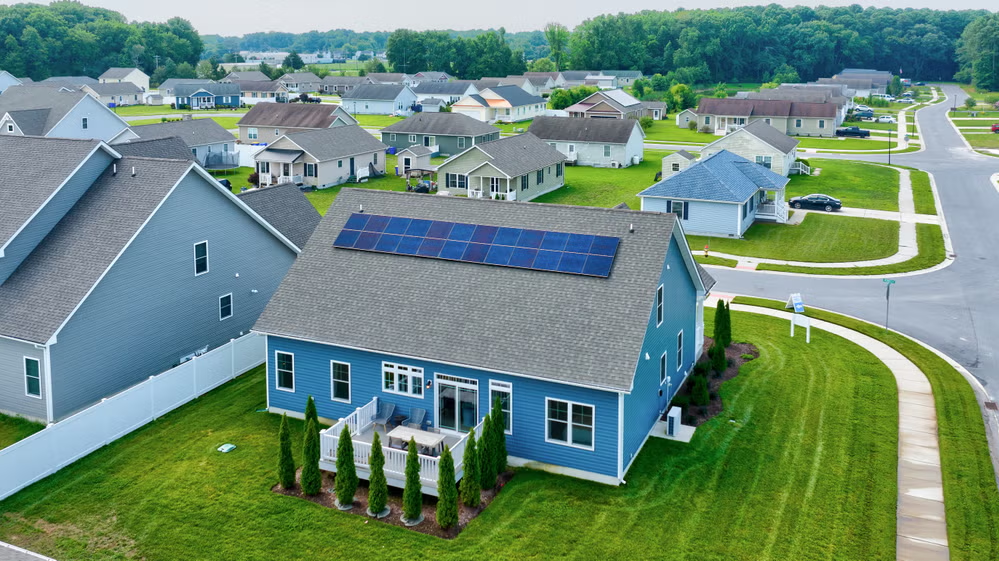
A foundation is part of the building envelope. That means the basement cannot be separated from the energy performance of the rest of the house.
A conditioned basement requires thoughtful insulation and air sealing just like any other part of a high-performance home. DOE building-science guidance notes that basements and below-grade walls should be insulated as part of a complete thermal envelope, with particular attention to moisture management.
That fits directly with how we understand the science of a better home.
Our homes are built to meet or exceed rigorous DOE Zero Energy Ready Home standards, now part of the DOE Efficient New Homes program. These standards build on ENERGY STAR new-home requirements with additional attention to energy performance, comfort, durability and indoor air quality.
We also include solar as standard, and our plans earn HERS Index scores ranging from 5 to 26. The foundation is one more part of the system that needs to support those performance goals.
Whether the home has a basement, crawl space or slab, we want insulation, air sealing, HVAC, ventilation and moisture control working together rather than solving separate problems independently.
A Basement Can Be Great When You Have a Real Plan for It
There are plenty of situations where we would consider a basement a strong choice.
A sloped homesite may make a walkout configuration particularly practical. A family might want a recreation space separated from the main living areas. Someone may have a serious home gym, workshop or hobby that benefits from dedicated square footage.
Guest accommodations can make sense when code requirements and the home design support them. Significant storage needs may justify additional space. Some homeowners simply prefer the separation a basement creates between everyday living and recreation.
Those are specific reasons.
That is the distinction we want buyers to make. A basement is at its best when it solves an actual need rather than checking a box.
What We Evaluate Before Recommending a Foundation
When our On-Your-Lot Experts evaluate a property, we are looking beyond whether a basement can physically fit.
We want to understand the topography and how water moves across the property. We look at the likely building envelope, access and grading. Soil and groundwater conditions can influence how below-grade construction should be approached. We consider how much excavation the chosen foundation may require.
What do you want the extra space to accomplish? Could those needs be met another way? How will the foundation affect the home’s energy performance? How does it fit within the total construction budget?
These questions are much easier to answer before construction begins.
If you are considering land in Sussex County, portions of Kent County or an eligible area in Maryland, a no-charge lot evaluation can help uncover these considerations before the foundation is locked into the plan.
Think About How You Will Live 10 Years From Now

A custom home should solve more than today’s problems.
The playroom that feels essential now may matter less once children leave home. Remote work needs may change. You may eventually value first-floor living or easier accessibility more than separated downstairs space.
Storage habits change too. A homeowner who deliberately designs better closets, garage storage and pantry space may discover there is less need for a large unfinished basement than originally expected.
The opposite can also be true. A flexible basement designed around recreation, hobbies, fitness or guests may keep serving the household for decades.
That is why we ask buyers to imagine the entire life of the home. The question is not simply whether you would use a basement next year. It is whether that space supports the way the home needs to evolve.
Frequently Asked Questions
Are basements worth it when building a new home?
They can be. A basement makes the most sense when the homesite supports it, the homeowner has a clear use for the space and the investment fits the overall construction budget. It should be evaluated rather than automatically included.
What are the disadvantages of having a basement?
Basements require additional excavation, foundation construction, drainage, waterproofing, insulation and moisture-management planning. Whether those considerations outweigh the benefits depends on the property and the homeowner.
Is a basement better than a crawl space?
Neither is automatically better. Crawl spaces and basements have different excavation, access, insulation and moisture-management requirements. The right choice depends on the homesite and home design.
Do basements increase home value?
A basement may add value, especially when it provides useful finished space, but resale value depends on the market, quality, functionality and home. We would not choose a foundation based on an assumption that one type always produces a better resale outcome.
Why do some builders recommend against basements?
A builder may recommend another foundation when drainage, groundwater, topography, excavation requirements or the homeowner’s budget make a basement less practical. A recommendation should be based on the specific property.
Can a basement cause moisture problems?
Because basements are below grade, moisture management requires additional attention. Proper grading, waterproofing, foundation drainage, humidity control and other building details can help a basement perform well.
What site conditions make a basement difficult to build?
High groundwater, low-lying building areas, challenging soil, flood concerns, difficult excavation, poor access or unfavorable topography can complicate below-grade construction.
Is it cheaper to build above ground or finish a basement later?
There is no universal answer because site conditions, design, finishes and construction requirements vary. Rather than relying on generic cost comparisons, we recommend evaluating what each option delivers within the specific home budget.
What can I build instead of a basement?
Depending on your priorities, you might put more resources toward a first-floor flex room, home office, larger garage, improved storage, outdoor living space or other above-grade features that you expect to use regularly.
Should I choose a foundation before buying land?
Ideally, the homesite should be evaluated before you commit to a foundation type. Topography, drainage, soil conditions, groundwater and the building envelope can all affect which options make sense.
Can Insight Homes help determine the best foundation for my lot?
Yes. Our On-Your-Lot Experts can evaluate your property through a no-charge lot evaluation and help you understand how the homesite, home plan, building systems and budget affect foundation options.
Build the Space You Will Actually Use
There is nothing inherently wrong with a basement. The mistake is assuming every new home needs one.
The right foundation responds to the land beneath it, the performance goals of the home, the construction budget and the people who will live there. Sometimes those factors point toward a basement. Sometimes they point somewhere else.
That is exactly why we take a Whole House Systems Approach. We would rather help you build the spaces you will actually use than add a feature simply because tradition says it belongs there.
If you are deciding between a basement or crawl space for land in Delaware or Maryland, talk with one of our On-Your-Lot Experts before locking in the plan. We can evaluate the property through a no-charge lot evaluation and help you understand how the foundation fits into the bigger picture.
You can also tour one of our 11 model homes to experience our floor plans in person. To start the conversation, call our Bridgeville team at 302-337-5336.


 Swipe to learn more